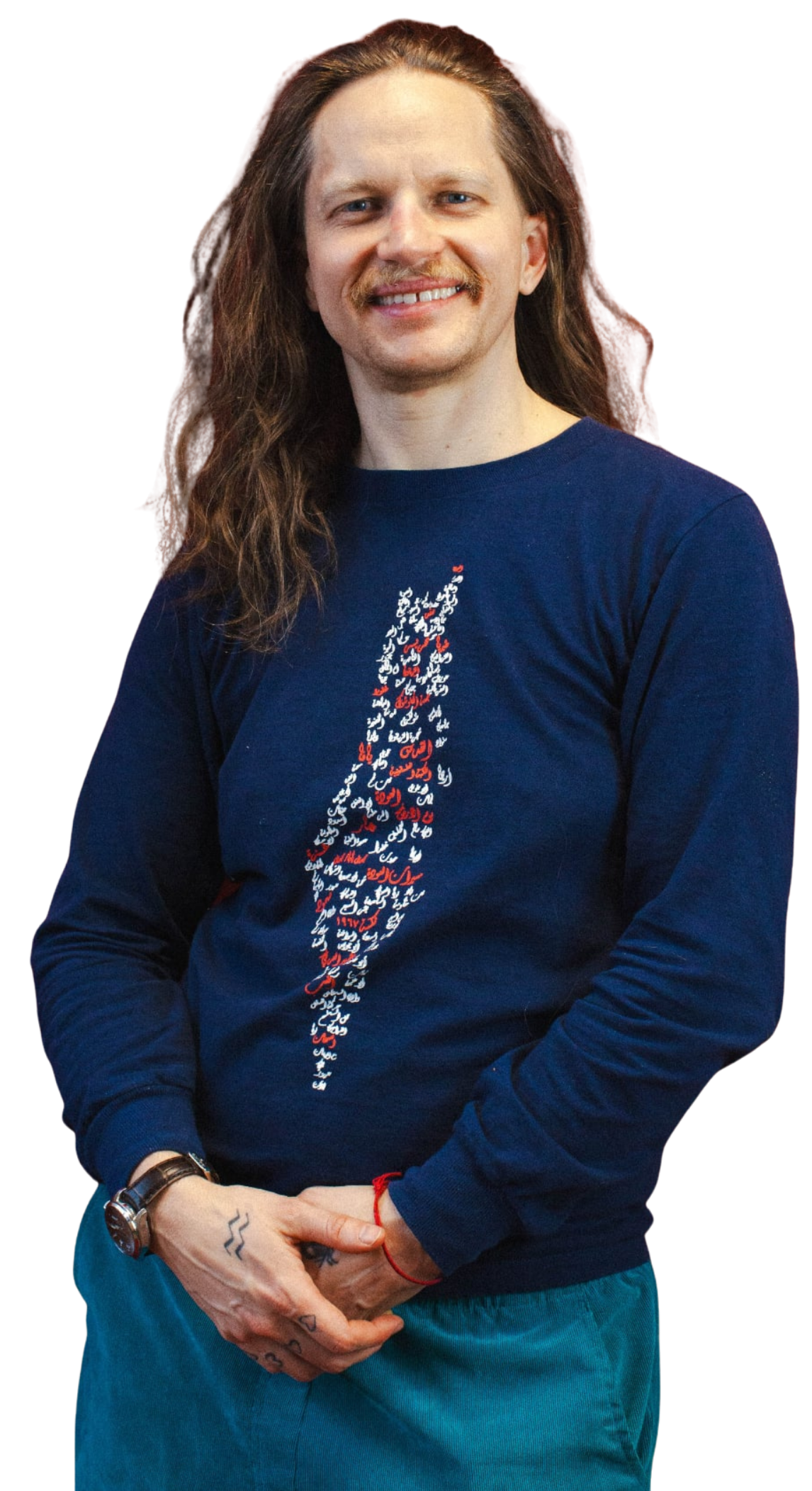
Why I do this work
Growing up I’d been close with three of my grandparents, and I grieved that my father’s mom passed when I was a baby. Then, living in New York City at 21 I realized I only had friends in their early twenties. I was totally disconnected from people who were much older than me, even though I lived in a city full of people of every age. So I became a volunteer with SAGE, which at the time stood for Services and Advocacy for GLBT Elders. Then about a month later, I went through the life-altering experience of breaking my knee cap in a bike accident. After the long physical and emotional recovery, I started a SAGE volunteer gig with Sandy Kern. I originally showed up twice a week to take care of her cat Nicky’s litter box, but that soon became secondary to simply spending time with Sandy. We would sit and chat for hours, me learning about her life, her love of classical music, her work as an administrative assistant for a prosthetics company, and her involvement in the shaping of SAGE. Sandy would listen patiently as I told her about my adventures, and I learned a lot from her insights. Spending time with Sandy helped feed my desire to connect with people who were older than me, but I wanted to learn more.
Right out of high school I had spent some time in film school, so I decided to transfer my art school credits to CUNY to study gerontology - the bio-psycho-social study of aging. It was there, at York College, where I first learned about ageism, and elder abuse, and I began to see the world differently. I started to remember my mom declaring her fear of aging and getting dementia. I reflected on hearing many people bemoaning getting older, and jokes between my father and his siblings about their birth order, with comments like “age before beauty.” I was reminded of all the gags in gift stores and all those horrible birthday cards…
During my first semester I heard Ashton Applewhite speak, which had a huge impact on my approach to these topics. In addition to my studies, I started exploring the topic of ageism with friends and loved ones and realized there was an underbelly of this iceberg that was unknown to most people I interacted with. When I came across an advertisement for a newly-reopened subway station I was shocked: “At the age of 80, who doesn’t need a facelift?” The ageism, sexism, lookism, and classism inherent in this ad helped open my mind to the intersections of ageism with other isms. As the Movement for Black Lives was just beginning, I became especially interested in ageism’s intersection with racism and chose a minor in Black Studies. Additionally, breaking my kneecap had given me a sliver of insight into the ableism everywhere around me. I was enthusiastically unpacking these different forms of oppression within myself, and feeling called to help others do the same.
Eventually I began to work with Ashton and Kyrié Carpenter to create the Old School Clearinghouse, now a Hub for Age Equity and Ageism Awareness. I moved from NYC to Dublin to Montréal, and I’ve facilitated workshops in all these cities and more. I’ve had the privilege to work with partners across the world, and my knowledge is informed by the experiences of so many others I’ve met and worked with.
When I’m not doing this work, I like to deepen my meditation practice and Buddhist studies, strengthen and uplift the queer community which surrounds me, and explore nature with my adventure cat, Fitz.
I’m based in Tio'tia:ke / Mooniyang, colonially known as Montréal, which is historically a gathering place for more many First Nations peoples including the Kanien’kehá:ka of the Haudenosaunee Confederacy, Huron, Abenaki, Cree, Mi'kmaq, Malicites, Attikamekw, Naskapi, and Anishinaabeg. I’m originally from Monsihòkink in Lenape territory, colonially known as northwest New Jersey. I am honored to have inhabited these lands for most of my life, and I say these names to acknowledge who to give these lands back to. Learn more about the native land you are on here.
photo by Aimer Filion